Buy an Autographed Copy of Powder Necklace

Showing posts with label africans out of africa. Show all posts

Monday, July 30, 2012

2012 BID Fellowship in Brasil: Part 3


church in Pelourinho square
dancers perform Capoeira at Bale Folklorico
I had heard/read Brasil has the most Africans outside of Africa before I went to Bahia, but it was warming and shocking all the same to see exactly what that means, live and direct. Salvador’s landscape, simmering heat, and energy mirrored Ghana’s to me: The red dirt roads, the various stages of construction happening everywhere, the gated communities of mini mansions tucked behind high walls, the cucumber-cool supermarkets stocked with pricey provisions, the Buddha-shaped women wrapped and knotted in African cloth selling smoking street food…

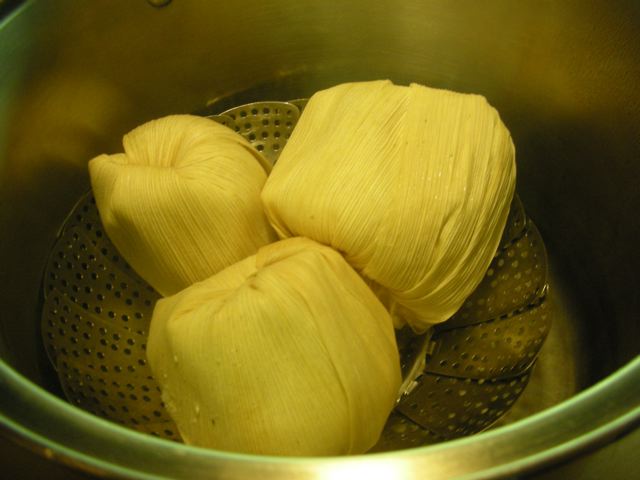
The food in particular was a comfort to me. I recognized kose (they call it acaraje); a sweet fermented corn dough snack wrapped in corn husks that looked like kenkey, and bankye aka boiled cassava which they served at our hotel for breakfast one morning. 

an acaraje stand in itapua, bahia

And then there was the religion.

On our first Wednesday trip to Pelourinho, we were apprised that many in the square who had donned red were doing so in observance of Santa Barbara day, Santa Barbara being an African orixa or god worshipped in Candomble, an African traditional religion practiced in Brasil.  That evening, we saw a procession of men robed in red African apparel, some in masks, drumming in the Pelourinho square.  On a Friday trip to the city center, we were told that many would be wearing white in honor of another African goddess called Oshun. As we rode around town, I noticed businesses named after Yemanja, a goddess of the river; and pedestrians wearing t-shirts/baseball caps hanging in the market celebrating an Olodum Festival. (The Olodum Festival is not religious; Olodumare is the name of God in Yoruba

The professor and poet Joao who came to visit us when we were staying in the Bahian 'burbs as part of a small welcoming committee of Brasilian writers, poets, and culture-keepers, so graciously took time out of his schedule to take us on a walking tour through his hometown, the historic city of Cachoeira. Cachoeira is known for its committed practice of Candomble. He took us to a building in honor of the Sisterhood of the Good Death, a secret society of African women 40 and above who did side work on top of their duties as enslaved captives to buy their freedom and that of others in the community. Joao explained that there had been some opposition to the building by one Catholic priest in the town, but in the end the memory of these women had been preserved by the author Jorge Amado who had been an advocate of preserving Brasil’s African culture. Later that day, Joao took us to a traditional African religious terreira or temple.

Having grown up partially in Ghana, in a Christian home, and being Christian myself, my spirit roiled with discomfort and I felt an inner warning shot fire. In Ghana, as in many countries outside of the West, things of the spirit are not taken lightly. Religious temples, ceremonies, and practices are not casual cultural tour stops, but portals to spiritual realms; and I did not want to invite or entertain any unfamiliar spirit(s).

But having been an Africana Studies major in college, and specifically having taken a course in the Sociology of Black Religion, I was and am well aware of the role religion—particularly Christianity—played in the enslavement, manipulation, and liberation of African people. While legislators, enslavers, and others who directly and indirectly benefited from the free labor force and subjugation of African men and women advanced the Society of the Propagation of the Gospel’s mission to enter “foreign parts", Christianize the African and Indian "heathen” and "savages", and effectively erase all connections to their native culture via language, religion, music, etc; Christian Abolitionists were calling out the hypocrisy and sheer evil of the institution of slavery and fighting for its end. 

Meanwhile, the ancestors of black liberation theology were at work. While many enslaved Africans got the explicit and subliminal message that life would be easier for them with respect to their interactions with the enslavers if they converted to Christianity, many of the forced African emigrés used the slavers’ religion as a cover to preserve and practice their traditional African religions, and/or communicate messages plotting escape from enslavers. In America, Harriet Tubman used Negro spirituals to direct Underground Railroad missions; and later it was no coincidence that the black church in America was a hub of the Civil Rights movement. In Latin America, Santeria and Candomble were examples of how the Africans who were enslaved used the Catholic church’s worship of saints as a cover to worship orixas, or merged the religious traditions into one belief system.

I respect the fact that many Afro-Brasilians so fiercely held onto their beliefs under threat of violence and extinction, and was so moved by the powerful story of the Sisters of the Good Death. The image of these women coming together to subvert the twisted system that kidnapped them from their homes and ripped them from their families by devising the means to buy their freedom and that of others in their community is just rockstar to me—while the converse of the town Catholic priest rallying against them is yawn-inducing. 

Now “Good Death”, Joao explained, signifies the African outlook on death not as a bad thing, but a continuation of another realm of life. As a Christian and African, this resonated with me because I believe Jesus’s death was a good thing—the liberation of mankind from the sin that separates us from God—and his resurrection was the continuation of that good thing; the promise of eternal life to come for those that believe in him. That said, it struck me, as a Christian, how the religion has been used to manipulate African people into docility. As Joao shared the story of the Good Death Sisters, I wondered what I would have done in their situation. Would I have subverted, or would I have gone along with the okiedoke in the name of Jesus, afraid to rock the boat?

I asked myself this question in another way when we went to the Bale Folklorico in Pelourinho. As I watched the men perform the spiritual fight dance of capoeira, flipping and flinging themselves across the stage with acrobatic precision and balletic grace, I wondered why my spiritual guard was down. I also played back the museum visits we had made in Bahia, ambling past religious masks and other artifacts. Why was I comfortable seeing these religious performances and artifacts in environments sanctioned by whites as cultural institutions, and not in their natural environments?

It hit me after the Bale Folklorico just how much had been lost in the trade of human beings as slaves—how much Africa and her culture has been mythologized on both sides with whites dismissing African practice as heathen, pagan, savagery; and the Diaspora so fiercely protecting and preserving it that in some cases Africans journey to Brasil and other African enclaves in the Diaspora to study the indigenous way. Meanwhile, many Africans take it all for granted, even as African culture—as with all cultures—evolves.

Perhaps because Africans who remained on the continent did not feel the need to preserve the culture as much as those who were forcibly removed did, many contemporary Africans make the free choice to observe Christianity and Islam and other religions. I should add that not every Brasilian I encountered was a practitioner of Candomble. I learned later that some of the students that joined us on the tour of Cachoeira opted not to go inside the terreira because they are evangelical Christians. I also saw several Assemblies of God churches as we drove around town. I'm sure, as with every society, there are also many Brasilians of other faiths as well as agnostics and atheists. I should also add that in the narrative of Christianity, one major truth gets left out that one of the oldest Christian churches was founded in Ethiopia in the 1st century, pre-dating the transatlantic slave trade and colonialism as we know it

Spirituality and religion at their purest expression and practice come down to faith. What you believe is definitely molded by the value system you were raised with as a child as well as the experiences you have as you mature into adulthood. At some point, every adult makes the determination for herself or himself to continue in the faith, or lack thereof, they were brought up with, or abandon it for something else. That decision can be clouded by race, ethnicity, and history, but again, in its purest form faith and what you choose to believe has nothing to do with external things. It’s an internal choice that then, ideally, finds its expression in our action.

What does any of this have to do with my adventures as a writer? Well, I think it necessary to hash these things out as best I can for myself, so I can write with deeper honesty and integrity.  


If you haven't already, check out Part 1 and Part 2 of my experiences as a 2012 BID Fellow. Thank you for reading!


Friday, July 20, 2012

2012 BID Fellowship in Brasil: Part 2

One of the most amazing things about the BID Fellowship experience for me, was learning from and sharing with Bahian poets, writers, and culture-keepers. Thanks to the amazing folks at the Secretaria da Cultura do Estado da Bahia, we had the unique opportunity to visit the home of legendary poet Jose Carlos Limeira. Mr. Limeira gave us a comprehensive review of Bahian culture past and present and then, generously, invited us to present. 

Kwame reading one of his poems in Jose Carlos Limeira's living room 

Kwame Alexander who founded the BID Fellowship gave a powerful talk on the resistance tradition of African-American culture with specific focus on song and literature. He spoke accompanied by poets and BID Fellows Deanna Nikaido and Maritza Riveira, and BID Fellow, Teacher, and Musician Randy Preston who helped illustrate his points about how Negro Spirituals and literature were used to communicate messages among our mothers, fathers, uncles, and aunties who had to endure slavery, and later by the likes of Langston Hughes, Zora Neale Hurston, etc who powerfully documented the black experience in the Harlem Renaissance. He went on to reference the works of J. California Cooper, Nikki Giovanni, Toni Morrison, and others who continued the activist tradition of black literature, ultimately gaining the attention of the publishing industry. 

BID Fellow Chris Colderley, a sharp poet and English teacher, followed with a thoroughly persuasive presentation on why students need to be taught poetry in schools.  He spoke of not only the ability of poetry to help students build facility with written and vocal expression, but of poetry's power to transform the way we look at the world. Of course, we were all sold.

I jumped in here to give a personal talk about how I came to write African stories. Here's a transcript of what I shared below.  It's long so I won't be offended if you read it in sips.


Poets Jose Carlos Limeira & Livia Natalia 
"I came to love African Literature by way of African-American literature. Conveniently—and controversially—corralled into the black book section of my bookstore (and on my big sister’s bookshelf), I discovered April Sinclair’s Coffee Will Make You Black, Bebe Moore Campbell’s Your Blues Ain’t Like Mine, James Baldwin’s Just Above My Head, Gloria Naylor’s The Women of Brewster Place, Toni Morrison’s Tar Baby, Alice Walker’s The Color Purple, Maya Angelou’s All God’s Children Need Travelling Shoes, and so many others.

These books became my gateway to the works of other black authors who weren’t American. By way of black book anthologies, I found Antiguan writer Jamaica Kincaid, and through stellar word of mouth I picked up Haitian author Edwidge Danticat’s Breath, Eyes, Memory and Krik Krak, for example. Some referenced Africa explicitly—like The Color Purple, All God’s Children or Lorraine Hansberry’s play A Raisin in the Sun—while others told stories that I saw shadows of my African story in.

Whether exploring the complexities of the black immigrant experience or the unique dynamic between Africans and African-Americans, or the particulars of being a woman, these books each offered me a distinct mirror. It was liberating to see myself, albeit slightly refracted, on these pages; and so I moved on to African literature.

Now, before I discuss the African books that inspired me, I think it bears explaining that growing up in New York as the daughter of Ghanaian immigrants, my definition of blackness was shaped by African-American culture.  My parents had grown up in Ghana and had experienced the downsides of colonialism, neo-colonialism, and racism, but their identities were not carved by race. Their priority was to get an education, make money, and send it back home. Everything was about “back home” for them. There was always an exit plan—a place they would escape to.

But for me, “home” was our working-class neighborhood in Queens, New York. My friends were the children of immigrants from Panama, Jamaica, Trinidad, and Haiti, and families who had moved to New York from the South. We children came from other places, but we were New Yorkers. And to prove it, we made fun of anything that threatened that identity. I made fun of Haitians. African-Americans made fun of me calling me “African booty scratcher.” Etcetera.

It didn’t help that the Ethiopian famine was in heavy rotation on the news in the early ‘80s. The images of African children covered in flies, their bellies bloated with malnutrition, made me cringe. If that was Africa, I wanted no part of it.

So, in 1990, when my parents took us to Ghana for vacation, my American identity firmly in place, I entered the country feeling superior to, and amused by, all that was “different.” I did not know that my parents had planned that vacation to be a permanent one.

Stuck in Ghana, and now enrolled in a boarding school two hours’ drive from my relatives’ home in Accra, I was forced to confront why it was that I felt better than those born in Ghana. I had to start examining why it was that in Africa, water, electricity, paved roads, and other things I had come to take for granted like cookies and soda and dessert were luxuries.

I was only 15, when I graduated from secondary school in Ghana and returned to the States, so I won’t pretend to have become Kwame Nkrumah. I was relieved to be back in the land of creature comforts, but, still, my perspective on who I was and where I came from had changed—expanded.

I had become proud of my expanded story and wanted to share it; so once again I looked to the African-American experience for help finding my voice. As an Africana Studies and Political Science major in college, I was inspired by the African-American political movement and sparked to find that Ghana’s first president Kwame Nkrumah also got his training from the burgeoning Civil Rights movement, using it to lead Ghana to Independence. In March 1957, Martin Luther King, Jr and his wife Coretta Scott King attended Ghana’s inaugural Independence Day celebration—at the personal invitation of Kwame Nkrumah himself.

In secondary school in Ghana, we read Ghanaian poet and author Ama Ata Aidoo’s Dilemma of a Ghost and South African author Peter Abrams’ Mine Boy, among others; but it was a few years after college, that I started to read African literature for pleasure. Chinua Achebe’s Things Fall Apart and A Man of the People. Buchi Emecheta’s The Joys of Motherhood and The Bride Price. Chimamanda Adichie’s Purple Hibiscus and Half of a Yellow Sun. Ayesha Haruna Attah’s Harmattan Rain. 

Instantly familiar, these books were the closing of the circle for me, helping fill in the gaps from a historical perspective as to why millions of Africans fled their native countries in the ‘70s, ‘80s and ‘90s—my parents among them. They spoke of post-Independence struggles, war, gender, and life. Kids going to school. Parents going to work. Couples making love. This was the Africa I had experienced in all its dichotomies, and it was the Africa I wanted to write about.

It was during this period that I started to write what would become my first novel, Powder Necklace—an African story by way of London and New York.

The African story is global.

We know that the African experience is not restricted to tales of village life, or the impact of colonialism or neocolonialism, or immigration. Should African stories, by necessity, be about protagonists living in Africa, or do stories about African protagonists qualify—no matter where they may reside? Or does it come down to the author’s nationality? For example, is white British author Chris Cleave’s book Little Bee about a Nigerian girl in England as African as Nigerian author Chimamanda Adichie’s Half of a Yellow Sun?

In Brasil, for example, which has the largest population of African descendants outside of Africa; where Acaraje stands sell treats from Nigeria, and traditional African religions are the cultural norm, how do we classify the works of writers like Jorge Amado, Damaris Cruz, or Maria Firmina dos Reis and Machado de Assis?

The African story starts on the continent of Africa, but it has literally travelled around the world—just like the African people. It is a story that has birthed so many other stories—and that needs to be acknowledged and embraced.  Chimamanda Adichie poignantly spoke about the danger of the single story, particularly as it relates to the African story, and I wholeheartedly agree.

The current and next generations of literature students and teachers need to understand the connections between African literature and literary works from other continents; and grasp the influence Africa has had on global literature. African literature—black literature—needs to be talked about, handled, and appreciated, in its fullest context.

But first, we the people need to understand and appreciate ourselves in our fullest context. We’ll need to stop thinking of ourselves as a minority, when in fact, people of African descent are a global majority. Once and for all, we need to know with all confidence that our story—in all its origins and permutations—is worth telling. Because it is."

Wednesday, May 4, 2011

I'll never forget something filmmaker Lee Daniels once said...

On April 15th, I had the opportunity to share the African Film Festival panel stage with Dr. Sheila Walker an anthropologist and documentarian whose film Africans Out of Africa screened at the festival, composer Onel Mulet, and moderator Michelle Materre a Media Studies professor at The New School who curates "Creatively Speaking", a forum committed to supporting films and other independent media that offer realistic and universal stories by and about people of color. Needless to say, as a Political Science and Africana Studies major with a concentration in the "politics of beauty", I was completely geeking out.

Nigerian filmmaker Andrew Dosunmu's Restless City -- about an African immigrant surviving on the fringes of New York City -- will screen at BAM on Sunday, May 29th as part of the African Film Festival

We previewed clips of Dr. Walker's film, Joao Daniel Tikhomiroff's Besouro, and Carolina Moraes-Liu's Ebony Goddess: Queen of Ile Aye before diving into conversation about everything from the UN's declaration of the year 2011 as the International Year for People of African Descent to the incredible power of pop-culture portrayals to shape people's perceptions of whole cultures, to diasporic food routes. The intimate gathering at Columbia University's Institute for African Studies lent itself to a true roundtable discussion. One particular aspect of our conversation that titillated me, questioned whether artists of color must produce work that is political/responsible/deep; and how to move beyond cultural ideas of what Africa/Africans/African-Americans/blackness is "supposed" to look/sound/read like, to move the entire culture forward.

Diaspora Food: Collard greens are an awful lot like Ghanaian kontomire stew

I might have mentioned this in a prior post, but I'll never forget something filmmaker Lee Daniels once said. He was promoting his then new film The Woodsman about a recently paroled child molester living next door to a school, and he said he considered casting Samuel L. Jackson for the lead -- but his mother begged him not to put a black man in such a wound-opening role. The part ultimately went to Kevin Bacon, with rapper/actor Mos Def playing the cop monitoring the title character's return to society. Daniels later told me in a phone interview for his film Shadowboxer, that his mother wishes he would do more family-friendly fare like Tyler Perry does.

If only Mama Daniels knew what a powder keg of criticism Tyler Perry's films ignite. With his depictions of middle class African-American life, the director has elicited conflicted emotions and sharp debate amongst a large group of blacks with many celebrating his immense success while lambasting him for mishandling the black story via soap operatic characters, over the top plot devices, and cringe-inducing catchphrases like "Hallelujer" that dredge up stereotypes about black dialect. The critique from fellow filmmaker Spike Lee in particular caused Perry to lash out.

Of course there was no resolution to our debate at the Film Festival panel about the virtues (or lack thereof) of films like Baby Boy (one of my faves by the way) and Don't Be a Menace to South Central While Drinking Your Juice in the Hood for example, versus the work of helmers like Julie Dash, Kasi Lemmons, and Spike Lee. Partly because of the fact that there are so few successful black filmmakers, and mostly because of the human inability to please everyone, the real anxiety is rooted in the fact that the few depictions out there have so much power.

Author K.C. Washington founded her novelty postcard business Noir-a-Gogo featuring 1950s pin-ups because images of the times usually omit black sex symbols. "We were there!" her promotional materials shout.

This same debate is raging in black literary circles as so-called "street lit"/"urban fiction" titles share shelf space in African-American book sections next to literary classics by James Baldwin, Zora Neale Hurston, Richard Wright, Alice Walker, and Toni Morrison; as well as contemporary works by writers like Zadie Smith and Edwidge Danticat. In the year that I've been working to promote Powder Necklace, I've had numerous conversations with other writers about this situation where I express my commitment to getting to a time and place where all of these really different stories can coexist without bearing the weight of upholding a narrow definition of blackness.

If Steven Spielberg can direct one of the most enduring depictions of black women, and Kathryn Stockett can write a story about black maids in the dialect of the black south, and Chris Cleave can pen a bestselling novel about a Nigerian girl, black artists must be free to put out work that reflects their inspiration.

with Cheetah Girls author Deborah Gregory and Harmattan Rain author Ayesha Harrunah at Delta Sigma Theta's "Reading Helps Your Imagination Bloom" Book Fair

On April 10th, I joined Cheetah Girls series novelist Deborah Gregory, Butterfly Rising author Tanya Wright (and Cosby Show alum who was Theo's girlfriend "before Justine" she reminded us), Christian career advice writer Carol Mackey, The Cheating Curve author Paula Renfroe, and my ace Ayesha Harruna Attah at the Delta Sigma Theta book fair at Medgar Evers college. As some of the writers in the room rose to introduce professors, parents, children, and book lovers to their works, it struck me that you could not have brought a more diverse assortment of authors together.

Likewise, on April 30th, two lawyers, an ex-con, an author and publisher, a bartender, a poet, a cat lover, the descendant of a black Civil War vet, and a fashion blogger -- all authors -- converged in the Harvest Room of the Jamaica, Queens Farmer's Market for the "April is Book Month in Queens" fair. K.C. Washington (who owns Novelty Postcard business Noir-a-Gogo), David L, Fabiola Sully, Cathleen Williams, Natasha "Mz Grammy Bear" Graham, Willie Cooper, and Sandra Glaves Morgan were among the disparate group selling their literary wares, each with a unique, yet equally rousing story to share.

The up-and-comers in the room were all at different stages of our literary careers, and we're taking different paths to advance; but as black authors we have to feel free to get there in our own way -- even if it's uncomfortable a la Samuel Jackson as child molester/a white woman writing in black dialect, even if it isn't terribly good -- but especially when it's great. Ytasha L. Womack's book Post-Black has awesome things to say on this topic.