Buy an Autographed Copy of Powder Necklace

Wednesday, February 27, 2013

African Wine, Food, Music & Words--You're Invited!


New York Friends, come celebrate the 3rd Birthday of my firstborn book with a "Taste of Africa". On  April 6, 2013, I'm going to be reading and signing books at an intimate gathering in the West Village complete with tasty eats and wine, and a performance by Sierra Leone's own Azania. Please say you'll come -- all ticket sales will benefit Telem Camp 2013.  You can buy a ticket ($25) here.

Tuesday, February 26, 2013

My New Writing Life

Forgive the silence! I've been adjusting to my life as a full-time writer.

Back in June, I resigned from my day job to focus on figuring out how to "just write". It's been a grind and a half.

I imagined myself flying through my third book (which I've started!) with all this new time devoted to my craft. Instead, it's been a balancing act of pitching editors to write articles, selling my copywriting skills to ad agencies; then writing the work I've been blessed to get, and chasing the resulting checks.

When I add up the time I spend pitching, writing articles/copy, and check-hunting, I have just a little more than I used to to work on my personal projects. But even that sliver has been precious. I feel myself becoming more observant and in tune with my creative self/voice, and more attentive to what's happening beyond my life. I'm also taking more time to keep up with the business of the book industry and how it affects writers (see my blog People Who Write), taking classes, and connecting with others writers (I recently became active in my church's writers group).  

Again, it's a major hustle. I do not want to sugarcoat this new life of mine. But the fact that it has been possible to pay my bills has been exciting. It has completely changed the way I think about money, work, and my time. Now that I'm paid per hour, everything I choose to do with my time "counts." Alas, my time has become money. It's helped me to get better-ish at prioritizing, more aggressive about pitching, and a little more fearless about "putting myself out there".

In the meantime, I've had to have many talks with myself about money. I used to be so bad with money -- a huge spender. Then, I started saving to move out of my parents' house, and became a Suzie Orman disciple, a constant "Can I Afford This?" refrain in my head. That mindset helped me cut a lot of the frivolity out of my life, but as I've gone through this new round of cuts, if you will, I've learned to allow myself more indulgences, and appreciate them without chiding myself.

Above all, I've learned how much I love writing. I've always known this, but I feel a new respect for the gift and the craft. I'll try to be better about keeping you posted.


Tuesday, November 27, 2012

Check Out My New Blog: "People Who Write"


The Powder Necklace blog is supposed to be about my journey in promoting my first book and navigating the book industry as a novice. However, of late, as I've been focusing on my next two book projects (yesterday, I wrote the first line of Book #3!), the posts here and on my Powder Necklace Facebook page have veered off topic. To get back on course, I've started a new blog called "People Who Write" where I'll share info that's more relevant to writers and book nerds.

I haven't abandoned this blog though! I am still on the grind pushing Powder Necklace and actually have a few events lined up in the New Year which I am super-psyched about. I'll share the deets once I have full info to share. Thank you so much for sticking with me!!

Saturday, November 10, 2012

Collateral Damage?

Too much?

Now that The Election is over, I can exhale.  In the six weeks leading up to D Day, I gave in to all the anxiety-inducing reports about statistical dead heats and razor thin edges and nearly dissolved into a palpitating heart.  It got so bad that I basically lost it on my sister when, during her Hurri-cation Sandy stay at my house (her power was out for a week), she insisted on listening to both sides and flipping between MSNBC and Fox. 

It didn't help that I was working on a blog post for MadameNoire.com which I've been contributing a lot to lately, about an Election-themed exhibit happening simultaneously in seven museums across the country in which a portrait of Obama hung on a wall while Mitt Romney's photo waited on the floor, only to replace Obama's if he won.  The idea of the Romney shot replacing Obama's picture gave me night sweats. 

I can't remember ever feeling so invested in the outcome of an election though I'm not sure that's a good thing. Four years ago, I campaigned for Obama in Pennsylvania on two separate occasions and made phone calls to battleground states, but this time, oddly, his victory or defeat felt more personal. I genuinely believe in President Obama's core philosophy--I think Michelle Obama expressed it best when she said "When you've worked hard and done well, and walked through that doorway of opportunity, you do not slam it shut behind you. No, you reach back and you give other folks the same chances that helped you succeed."

Too loud?

I've never been the type of person to wear my affiliations on my sleeve. In fact, I've existed keeping mum about how I truly feel about a lot of things for most of my life, reserving expression of my feelings for the endless journals I've filled and my very closest family and friends. By nature I'm more of a watcher and a listener (good traits for a writer, I think), but over the last few years something's come over me. Lol.

One of the biggest dreams of my life came true in 2010 -- my first book was published -- and I had to open my mouth and sell it.  I had to be persistent, unabashed, sometimes obnoxious to be heard. For example, the old school rapper Fab Five Freddy bought my book at the Harlem Book Fair two years ago just to shut me up, I think. After I went all Crazy Eddie on him, he said "Damn, girl!" plunked down his $15 and left me to his peace. I didn't know I had that in me until the book came out.  Since the book has been out, I've had moments when I've had to tone it down or turn it up as I've discussed in my "Why Michelle Obama?" post and seek a balance as I posted in "The Writer's Prayer."

Originally, I thought the balance I was seeking had to do with self-promotion and work-life, but I now realize it's more about my desire to find the balance between how much to reveal about what I feel and who I am, and how much to keep for myself. In essence, what am I willing to wear on my chest. In advertising/marketing, promotional materials like branded t-shirts and the deck chairs pictured above are called collateral. An appropriate term considering collateral also refers to what you're willing to pledge/put on the line for some bigger debt you owe.

Anyway, I'm still figuring this out. I got more silent in the last year and a half figuring everyone within my immediate and extended social reach already knew about Powder Necklace and also because I was devoting more time to working on Book #2--but I was shocked to find that some of my friends still didn't know I had a book out. Funny, when you think you're being too loud, it turns out you aren't being loud enough. 


Sunday, September 9, 2012

I'm in 'Time Out Accra'!

A Facebook friend sent me this scan of a write-up on me and the book in Time Out Accra! I did this interview last year, but couldn't find it anywhere. Thank you, 'ko La for alerting me to it, and thank you, Time Out Accra for including me in this.

Wednesday, September 5, 2012

Ghana in 28 Days


I'm back from a monthlong trip to Ghana which doubled as family time, an opportunity to participate in homecoming activities at my high school, a chance to visit the OrphanAID Africa Foster Family Center compound, and research for my next book project. I thought for sure 28 days would be more than enough, but of course it wasn't. 

I got to Ghana a week after the abrupt and shocking death of the late President John Evans Fiifi Attah Mills. The entire nation was in mourning. News programs seemed to report only on the funeral preparations. (16 heads of state/dignitaries were coming, including Hillary Clinton.) And in the two days leading up to his August 10th burial, the entire nation was invited to file past his glass-encased body in a public wake. Every other billboard that lined the roads eulogized Mills as organizations and corporations publicly expressed their grief and condolences. Everything was draped in the red and black funeral colors reserved for royalty. 

different versions of Mills' funeral cloth

I always learn something new about the culture when I visit Ghana, and via Mills' funeral, I learned just how much fashion "speaks" in Ghana. Perhaps I was just sensitive to it after reading Catherine E. McKinley's insightful memoir Indigo, which charts the significance behind the designs of many African prints and cloth dyeing processes. To commemorate Mills' death, several cloths were designed including different versions of a State Cloth, and a Party Cloth meant for members of his political party NDC. Being the fashion lover I am, I wanted to collect a few of the cloths as keepsakes of the historic moment (Mills is the only Ghanaian President to die in the middle of his term in office).  But I couldn’t choose a cloth simply for aesthetics.

The Party Cloth, which bears the NDC insignia of a green, white, red, and black umbrella, was banned from the actual funeral so as not to promote partisan politics at the late President's funeral. (This is an election year in Ghana.) Of course some people wore the NDC cloth anyway, but I went with an all black cloth instead.  

During that first week of mourning, I traveled to my alma mater Mfantsiman Girls' Secondary School to give a talk on creative writing as part of the Homecoming festivities. Every time I make the journey from Accra to Saltpond, I am 12 years old again. My stomach drops and my armpits start leaking the moment the car passes Mankessim, the market town less than 20 minutes' drive from the school. I make the journey every single time I go to Ghana. It's a weird pilgrimage for me. 

Anyway, when we got there, the first thing my mother and sister chorused was: "The school looks so much better!" The fresh paint wasn't the half of it.  The current Headmistress presented a progress report that moved me to tears. The PTA have donated 50 computers, and refurbished the computer lab. There is a new classroom block, ostensibly so students don't have to have class in outdoor huts anymore. The students no longer have to eat in shifts thanks to the new dining hall the PTA built, big enough to accommodate the total school population. The '85 Year Group refurbished the Infirmary and donated a tractor to the Agriculture Department. And the students are snagging prizes and winning competitions left and right. I didn't check for myself, but the students later told me, the water flows relatively consistently.

A few more reports followed with similar news of development as the Mfantsiman Old Girls Association (MOGA) shared all the initiatives they planned to take up to improve the Mfantsiman experience. And then I was up. 

Mfantsiman Girls
About 400 students who had stayed on campus to prepare for upcoming exams filed into the pews of the chapel which doubles as the school assembly hall. I felt my mouth go dry with nerves as I began to speak to the congregation. In the crowd, I could see myself at 12, sandwiched between my friends, frenemies, tormentors; and very quickly, I was crying. My mom started crying too. I saw some of my old school mates wiping tears as well; one graciously offered me a tissue. This last gesture generated a chorus of "AWWWWW!!"s from the girls. :-)

Once I pulled myself together, I spoke about the importance of seizing our own stories. 

It was an experience I will never forget.
  
I got to travel around the country a bit. 

A friend took us on a tour of Tema Harbor, the port where the bulk of goods shipped to Ghana passes through. Stupidly/glamorously, I wore heels, but, thankfully, I was able to maneuver the rocky gangplank without a tumble. Along the way we discovered a community of (cute!) rastas living in makeshift houseboats. 

We later went to this amazing village called Nzulezo that literally hovers over a river--it's built on stilts! It was a six hour drive from Accra, then an hour canoe ride to the actual village, but it was worth it. The village of 450 men, women, and children are used to being ogled all day every day by visitors so they are prepared. The children greeted us at the canoe drop with post cards for sale, and when they saw no one was interested, they started dancing for money. I had this gross conflicted feeling watching these children--toddlers really--perform for cash. They were too young to be transacting for money. But I watched, riveted, and handed a few cedis over anyway because they were so damn good at the azonto, a dance craze that has totally taken over the nation. Right after they got their money, the smiles and dances were gone as the kids completely ignored us. It was funny and chilling at the same time. 

in Ada, we stumbled across this mural 
We drove to a beach town called Ada Foah. This time the drive was only two hours' long. The beach, which is bordered by the rolling waves of the Atlantic Ocean on one side and the peacefully still Volta Estuary on the other, was so gorgeous--even if a lot of it was littered with garbage. We walked for hours, passing the odd goat, fisherman, villager, and backpacking tourist. 

Three days before I left Ghana, I visited the OrphanAID Africa Foster Family Center compound. Sitting on five acres of land in a small town called Ayeniyah, an hour's drive from Accra, it is an amazing eco village built to educate, house, and treat abandoned and special needs kids. I was so moved by the dedication of the founder Lisa Lovatt-Smith and staff members, and the thoroughness of the planning. 

They have solar powered energy, trees that support the houses as beams. They collect and use "grey water" for washing to conserve the drinking water supply. They have a farm with plots for each family; and a physical therapy center for the special needs kids that is outfitted with exercise equipment and wheelchairs. They also have a library that needs books. You can post books to: 

OrphanAID Africa
PO Box DD61
Dodowa, Dangme West, Greater Accra
Ghana, West Africa

You can also donate here.

The OrphanAID Africa Library
I read a short passage from Powder Necklace to a group of the OA high schoolers and shared a bit about my experience attending Mfantsiman. In the Q&A that followed, one of the kids asked me what legacy I want to leave on earth. After seeing all that Lisa has been able to accomplish in the 10 years she's been in Ghana, I lumbered under that question. Creating a body of writing that blesses people seems so inadequate.

But it's what I got, and I intend to use it. Throughout my trip, I wrote and have the beginnings of three projects to keep myself busy, in addition to my second book. I can't wait to share them all with you. 


Monday, July 30, 2012

2012 BID Fellowship in Brasil: Part 3


church in Pelourinho square
dancers perform Capoeira at Bale Folklorico
I had heard/read Brasil has the most Africans outside of Africa before I went to Bahia, but it was warming and shocking all the same to see exactly what that means, live and direct. Salvador’s landscape, simmering heat, and energy mirrored Ghana’s to me: The red dirt roads, the various stages of construction happening everywhere, the gated communities of mini mansions tucked behind high walls, the cucumber-cool supermarkets stocked with pricey provisions, the Buddha-shaped women wrapped and knotted in African cloth selling smoking street food…

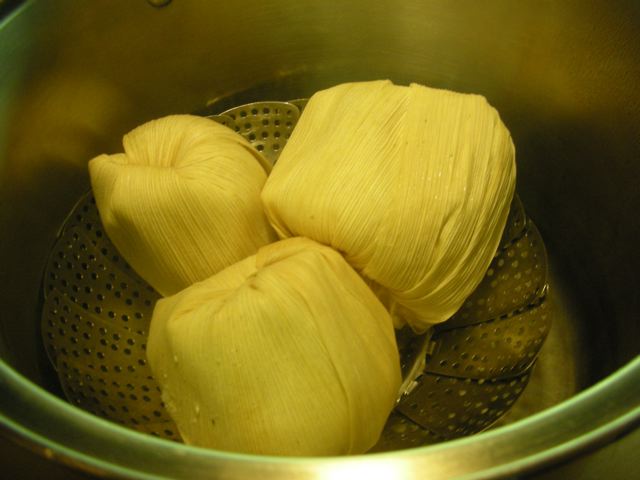
The food in particular was a comfort to me. I recognized kose (they call it acaraje); a sweet fermented corn dough snack wrapped in corn husks that looked like kenkey, and bankye aka boiled cassava which they served at our hotel for breakfast one morning. 

an acaraje stand in itapua, bahia

And then there was the religion.

On our first Wednesday trip to Pelourinho, we were apprised that many in the square who had donned red were doing so in observance of Santa Barbara day, Santa Barbara being an African orixa or god worshipped in Candomble, an African traditional religion practiced in Brasil.  That evening, we saw a procession of men robed in red African apparel, some in masks, drumming in the Pelourinho square.  On a Friday trip to the city center, we were told that many would be wearing white in honor of another African goddess called Oshun. As we rode around town, I noticed businesses named after Yemanja, a goddess of the river; and pedestrians wearing t-shirts/baseball caps hanging in the market celebrating an Olodum Festival. (The Olodum Festival is not religious; Olodumare is the name of God in Yoruba

The professor and poet Joao who came to visit us when we were staying in the Bahian 'burbs as part of a small welcoming committee of Brasilian writers, poets, and culture-keepers, so graciously took time out of his schedule to take us on a walking tour through his hometown, the historic city of Cachoeira. Cachoeira is known for its committed practice of Candomble. He took us to a building in honor of the Sisterhood of the Good Death, a secret society of African women 40 and above who did side work on top of their duties as enslaved captives to buy their freedom and that of others in the community. Joao explained that there had been some opposition to the building by one Catholic priest in the town, but in the end the memory of these women had been preserved by the author Jorge Amado who had been an advocate of preserving Brasil’s African culture. Later that day, Joao took us to a traditional African religious terreira or temple.

Having grown up partially in Ghana, in a Christian home, and being Christian myself, my spirit roiled with discomfort and I felt an inner warning shot fire. In Ghana, as in many countries outside of the West, things of the spirit are not taken lightly. Religious temples, ceremonies, and practices are not casual cultural tour stops, but portals to spiritual realms; and I did not want to invite or entertain any unfamiliar spirit(s).

But having been an Africana Studies major in college, and specifically having taken a course in the Sociology of Black Religion, I was and am well aware of the role religion—particularly Christianity—played in the enslavement, manipulation, and liberation of African people. While legislators, enslavers, and others who directly and indirectly benefited from the free labor force and subjugation of African men and women advanced the Society of the Propagation of the Gospel’s mission to enter “foreign parts", Christianize the African and Indian "heathen” and "savages", and effectively erase all connections to their native culture via language, religion, music, etc; Christian Abolitionists were calling out the hypocrisy and sheer evil of the institution of slavery and fighting for its end. 

Meanwhile, the ancestors of black liberation theology were at work. While many enslaved Africans got the explicit and subliminal message that life would be easier for them with respect to their interactions with the enslavers if they converted to Christianity, many of the forced African emigrés used the slavers’ religion as a cover to preserve and practice their traditional African religions, and/or communicate messages plotting escape from enslavers. In America, Harriet Tubman used Negro spirituals to direct Underground Railroad missions; and later it was no coincidence that the black church in America was a hub of the Civil Rights movement. In Latin America, Santeria and Candomble were examples of how the Africans who were enslaved used the Catholic church’s worship of saints as a cover to worship orixas, or merged the religious traditions into one belief system.

I respect the fact that many Afro-Brasilians so fiercely held onto their beliefs under threat of violence and extinction, and was so moved by the powerful story of the Sisters of the Good Death. The image of these women coming together to subvert the twisted system that kidnapped them from their homes and ripped them from their families by devising the means to buy their freedom and that of others in their community is just rockstar to me—while the converse of the town Catholic priest rallying against them is yawn-inducing. 

Now “Good Death”, Joao explained, signifies the African outlook on death not as a bad thing, but a continuation of another realm of life. As a Christian and African, this resonated with me because I believe Jesus’s death was a good thing—the liberation of mankind from the sin that separates us from God—and his resurrection was the continuation of that good thing; the promise of eternal life to come for those that believe in him. That said, it struck me, as a Christian, how the religion has been used to manipulate African people into docility. As Joao shared the story of the Good Death Sisters, I wondered what I would have done in their situation. Would I have subverted, or would I have gone along with the okiedoke in the name of Jesus, afraid to rock the boat?

I asked myself this question in another way when we went to the Bale Folklorico in Pelourinho. As I watched the men perform the spiritual fight dance of capoeira, flipping and flinging themselves across the stage with acrobatic precision and balletic grace, I wondered why my spiritual guard was down. I also played back the museum visits we had made in Bahia, ambling past religious masks and other artifacts. Why was I comfortable seeing these religious performances and artifacts in environments sanctioned by whites as cultural institutions, and not in their natural environments?

It hit me after the Bale Folklorico just how much had been lost in the trade of human beings as slaves—how much Africa and her culture has been mythologized on both sides with whites dismissing African practice as heathen, pagan, savagery; and the Diaspora so fiercely protecting and preserving it that in some cases Africans journey to Brasil and other African enclaves in the Diaspora to study the indigenous way. Meanwhile, many Africans take it all for granted, even as African culture—as with all cultures—evolves.

Perhaps because Africans who remained on the continent did not feel the need to preserve the culture as much as those who were forcibly removed did, many contemporary Africans make the free choice to observe Christianity and Islam and other religions. I should add that not every Brasilian I encountered was a practitioner of Candomble. I learned later that some of the students that joined us on the tour of Cachoeira opted not to go inside the terreira because they are evangelical Christians. I also saw several Assemblies of God churches as we drove around town. I'm sure, as with every society, there are also many Brasilians of other faiths as well as agnostics and atheists. I should also add that in the narrative of Christianity, one major truth gets left out that one of the oldest Christian churches was founded in Ethiopia in the 1st century, pre-dating the transatlantic slave trade and colonialism as we know it

Spirituality and religion at their purest expression and practice come down to faith. What you believe is definitely molded by the value system you were raised with as a child as well as the experiences you have as you mature into adulthood. At some point, every adult makes the determination for herself or himself to continue in the faith, or lack thereof, they were brought up with, or abandon it for something else. That decision can be clouded by race, ethnicity, and history, but again, in its purest form faith and what you choose to believe has nothing to do with external things. It’s an internal choice that then, ideally, finds its expression in our action.

What does any of this have to do with my adventures as a writer? Well, I think it necessary to hash these things out as best I can for myself, so I can write with deeper honesty and integrity.  


If you haven't already, check out Part 1 and Part 2 of my experiences as a 2012 BID Fellow. Thank you for reading!