Buy an Autographed Copy of Powder Necklace

Friday, July 20, 2012

2012 BID Fellowship in Brasil: Part 1

I'm a big believer that God orders our footsteps. In other words no meeting or encounter is coincidental. I say this by way of preamble of how I came to take part in the amazing opportunity to join eight writers--Kwame Alexander, Chris Colderley, Tayari Jones, Marjorie Light, Leslea Newman, Deanna Nikaido, Randy Preston, Maritza Rivera--in Salvador da Bahia, Brasil as part of the 2012 BID International Fellowship the first two weeks of July.

Back in May 2010, I went on my first out-of-state trip to promote Powder Necklace at the Afr'Am Festival in Norfolk, VA. I set-up my books in the Literary Cafe unsure of what else to do as I watched the other authors get their hustle on. They hawked their books calling passersby to stop by their tables, dispatching friends and children to hand out bookmarks and other marketing collateral, and explaining their stories on the different panels.

I was incredibly intimidated. I had my big box of books, and I was wearing a cute dress, but I was not prepared. Everyone was gracious to me, but as they peppered me with questions about my plans to market myself and the book, it was clear I was a rookie. One of the writers I met that day was Tinesha Davis, author of Holler at the Moon. She was incredibly supportive and so generous with her story, and information and suggestions about what I could do to get the word out about my book.

A few weeks later, she came to New York to do a joint reading at Hue-Man bookstore in Harlem with authors Kwame Alexander and Victoria Christopher Murray. After the reading, several of us went to dinner. That evening, I learned from Kwame that he was producing the Capital Bookfest. I sank my teeth in as it were, rabidly pitching myself for the opportunity to attend, and he graciously invited me. Over the next six months, I had the opportunity to sell my books and speak on panels in the three cities the Capital Bookfest hosted dates. It was the opportunity of a lifetime, and I will be forever grateful to Tinesha, Kwame, and God for connecting me with both. I really think of them as angels to my literary career.

But fast-forward to Brasil.

I knew Kwame had launched an international fellows program two years ago. We had become Facebook friends and I "liked" all the posts that popped up in my newsfeed that he and Tinesha shared of their time in Tuscany. I never imagined that two years later, I would be invited to the second international fellowship in Brasil!

As the date for my flight approached, I kept fearing something would go wrong because I wanted it so badly; so when we were stopped by American Airlines officials on our way to board the connecting light from Miami to Salvador, I felt my armpits begin to puddle. Half of our group was on the plane, and the other half of us had been held back. We waited a half hour with no explanation as the AA folks called border patrol. Finally, we were told we could board.

When we got on the plane, one of the flight attendants announced the plane was 5000 pounds overweight. My fellow Fellows must have seen my panic because they all graciously came to visit me where I sat in the booty of the plane--literally the last row on the aircraft where I could feel every cough and wheeze of the engine. One of the fellows, acclaimed novelist Tayari Jones, came by to share stories of the craziness that was happening in First Class. One guy was apparently waving cash demanding to be let off the flight.

Anyway, we made it to Salvador after a detour in Puerto Rico to replace the fuel they had dumped to lighten the plane, and it was beautiful. In between get-to-know chit chat with the other Fellows, I stole glances at the panorama whizzing past my window. Later, I was able to process the Bahian vibe and put it into a picture I could understand: it was Ghana x Cali, if that makes any sense. The kiosks, roadside food stands, omnipresent construction, and red clay of Ghana with the omnipresent pounding surf and foaming waves of Surftown USA.

We were staying in a house in a posh suburb of Bahia, called Barro do Jacuipe, a five minute walk to the beach. After unloading our stuff, we headed to the beach to make official intros, share a bit about the projects we planned to work on, and learn about the structure of the Fellowship. The itinerary would include education trips into the city of Bahia along with two free travel days. Aside from one meal a day that we were to enjoy in communal company, we were free to work on the projects we had come to the Fellowship to work on.

Those first few days we wrote and ate and talked into the night (swatting mosquitoes and flies) and respectfully passed around the Vivo internet stick so we could get on the interwebs. One Fellow, prolific author and poet Leslea Newman led a wonderful workshop on formal poetry. (Leslea and I also got wicked lost on a beach walk gone horribly awry.)

The Secretaria da Cultura do Estado da Bahia so generously availed themselves. They organized an evening of exchange between us and Bahian writers, poets, and culture-keepers. They read and sang, and we spoke through the patient translation of one of the officials at the Secretaria over Abara and other treats they brought to our home.

The Secrataria also helped organize a trip into the historic city of Pelourinho for us where we learned that the plaza used to be a popular square for those who enslaved to alternately show off and punish the human beings they enslaved. Pelourinho was also the site where the Afro-Brasilians revolted against colonial rule. Their revolution preceded the independence of all of Brasil, our guide explained. In Pelourinho, we also stumbled upon the foundation for Brasilian writer Jorge Amado. His books looked so amazing, but alas they were completely unaffordable as the taxes on books in Brasil are out of control!

On another day, we drove to the historic city of Cachoeira where Joao, a professor and poet, guided us though the town sharing nuggets of history about the Sisterhood of the Good Death, an order of African women who were enslaved that bought their freedom through side work (doing laundry, making cakes, etc) and ultimately bought the freedom of many others. We also visited a terreira or African temple in the hills of the city and learned a bit about the orixas (African gods) and the Candomble religion which has preserved much of the traditional African religious practices. It was a powerful and conflicted moment for me as a Christian which I'll get into in another (long) blog post. The picture above was taken in Cachoeira.

Later shit happened. One of the bathrooms in the house overflowed and we were forced to pack up abruptly. Kwame and Deanna who helped Kwame organize the trip were amazing at putting the alternative plan together so quickly.

We ended up in a sweet hotel on the beach in Itapua where we spent the rest of our time. Communal dinners continued poolside at the hotel or at the local churrasco, and in between, we scattered around the hotel to write.

I got some writing done, but I think in the end, the greater value of the trip was in meeting the people and getting exposed to the culture. I know I'll see the fellowship's impact in my future work.

Read more about the Fellowship in Part 2

2012 BID Fellowship in Brasil: Part 2

One of the most amazing things about the BID Fellowship experience for me, was learning from and sharing with Bahian poets, writers, and culture-keepers. Thanks to the amazing folks at the Secretaria da Cultura do Estado da Bahia, we had the unique opportunity to visit the home of legendary poet Jose Carlos Limeira. Mr. Limeira gave us a comprehensive review of Bahian culture past and present and then, generously, invited us to present. 

Kwame reading one of his poems in Jose Carlos Limeira's living room 

Kwame Alexander who founded the BID Fellowship gave a powerful talk on the resistance tradition of African-American culture with specific focus on song and literature. He spoke accompanied by poets and BID Fellows Deanna Nikaido and Maritza Riveira, and BID Fellow, Teacher, and Musician Randy Preston who helped illustrate his points about how Negro Spirituals and literature were used to communicate messages among our mothers, fathers, uncles, and aunties who had to endure slavery, and later by the likes of Langston Hughes, Zora Neale Hurston, etc who powerfully documented the black experience in the Harlem Renaissance. He went on to reference the works of J. California Cooper, Nikki Giovanni, Toni Morrison, and others who continued the activist tradition of black literature, ultimately gaining the attention of the publishing industry. 

BID Fellow Chris Colderley, a sharp poet and English teacher, followed with a thoroughly persuasive presentation on why students need to be taught poetry in schools.  He spoke of not only the ability of poetry to help students build facility with written and vocal expression, but of poetry's power to transform the way we look at the world. Of course, we were all sold.

I jumped in here to give a personal talk about how I came to write African stories. Here's a transcript of what I shared below.  It's long so I won't be offended if you read it in sips.


Poets Jose Carlos Limeira & Livia Natalia 
"I came to love African Literature by way of African-American literature. Conveniently—and controversially—corralled into the black book section of my bookstore (and on my big sister’s bookshelf), I discovered April Sinclair’s Coffee Will Make You Black, Bebe Moore Campbell’s Your Blues Ain’t Like Mine, James Baldwin’s Just Above My Head, Gloria Naylor’s The Women of Brewster Place, Toni Morrison’s Tar Baby, Alice Walker’s The Color Purple, Maya Angelou’s All God’s Children Need Travelling Shoes, and so many others.

These books became my gateway to the works of other black authors who weren’t American. By way of black book anthologies, I found Antiguan writer Jamaica Kincaid, and through stellar word of mouth I picked up Haitian author Edwidge Danticat’s Breath, Eyes, Memory and Krik Krak, for example. Some referenced Africa explicitly—like The Color Purple, All God’s Children or Lorraine Hansberry’s play A Raisin in the Sun—while others told stories that I saw shadows of my African story in.

Whether exploring the complexities of the black immigrant experience or the unique dynamic between Africans and African-Americans, or the particulars of being a woman, these books each offered me a distinct mirror. It was liberating to see myself, albeit slightly refracted, on these pages; and so I moved on to African literature.

Now, before I discuss the African books that inspired me, I think it bears explaining that growing up in New York as the daughter of Ghanaian immigrants, my definition of blackness was shaped by African-American culture.  My parents had grown up in Ghana and had experienced the downsides of colonialism, neo-colonialism, and racism, but their identities were not carved by race. Their priority was to get an education, make money, and send it back home. Everything was about “back home” for them. There was always an exit plan—a place they would escape to.

But for me, “home” was our working-class neighborhood in Queens, New York. My friends were the children of immigrants from Panama, Jamaica, Trinidad, and Haiti, and families who had moved to New York from the South. We children came from other places, but we were New Yorkers. And to prove it, we made fun of anything that threatened that identity. I made fun of Haitians. African-Americans made fun of me calling me “African booty scratcher.” Etcetera.

It didn’t help that the Ethiopian famine was in heavy rotation on the news in the early ‘80s. The images of African children covered in flies, their bellies bloated with malnutrition, made me cringe. If that was Africa, I wanted no part of it.

So, in 1990, when my parents took us to Ghana for vacation, my American identity firmly in place, I entered the country feeling superior to, and amused by, all that was “different.” I did not know that my parents had planned that vacation to be a permanent one.

Stuck in Ghana, and now enrolled in a boarding school two hours’ drive from my relatives’ home in Accra, I was forced to confront why it was that I felt better than those born in Ghana. I had to start examining why it was that in Africa, water, electricity, paved roads, and other things I had come to take for granted like cookies and soda and dessert were luxuries.

I was only 15, when I graduated from secondary school in Ghana and returned to the States, so I won’t pretend to have become Kwame Nkrumah. I was relieved to be back in the land of creature comforts, but, still, my perspective on who I was and where I came from had changed—expanded.

I had become proud of my expanded story and wanted to share it; so once again I looked to the African-American experience for help finding my voice. As an Africana Studies and Political Science major in college, I was inspired by the African-American political movement and sparked to find that Ghana’s first president Kwame Nkrumah also got his training from the burgeoning Civil Rights movement, using it to lead Ghana to Independence. In March 1957, Martin Luther King, Jr and his wife Coretta Scott King attended Ghana’s inaugural Independence Day celebration—at the personal invitation of Kwame Nkrumah himself.

In secondary school in Ghana, we read Ghanaian poet and author Ama Ata Aidoo’s Dilemma of a Ghost and South African author Peter Abrams’ Mine Boy, among others; but it was a few years after college, that I started to read African literature for pleasure. Chinua Achebe’s Things Fall Apart and A Man of the People. Buchi Emecheta’s The Joys of Motherhood and The Bride Price. Chimamanda Adichie’s Purple Hibiscus and Half of a Yellow Sun. Ayesha Haruna Attah’s Harmattan Rain. 

Instantly familiar, these books were the closing of the circle for me, helping fill in the gaps from a historical perspective as to why millions of Africans fled their native countries in the ‘70s, ‘80s and ‘90s—my parents among them. They spoke of post-Independence struggles, war, gender, and life. Kids going to school. Parents going to work. Couples making love. This was the Africa I had experienced in all its dichotomies, and it was the Africa I wanted to write about.

It was during this period that I started to write what would become my first novel, Powder Necklace—an African story by way of London and New York.

The African story is global.

We know that the African experience is not restricted to tales of village life, or the impact of colonialism or neocolonialism, or immigration. Should African stories, by necessity, be about protagonists living in Africa, or do stories about African protagonists qualify—no matter where they may reside? Or does it come down to the author’s nationality? For example, is white British author Chris Cleave’s book Little Bee about a Nigerian girl in England as African as Nigerian author Chimamanda Adichie’s Half of a Yellow Sun?

In Brasil, for example, which has the largest population of African descendants outside of Africa; where Acaraje stands sell treats from Nigeria, and traditional African religions are the cultural norm, how do we classify the works of writers like Jorge Amado, Damaris Cruz, or Maria Firmina dos Reis and Machado de Assis?

The African story starts on the continent of Africa, but it has literally travelled around the world—just like the African people. It is a story that has birthed so many other stories—and that needs to be acknowledged and embraced.  Chimamanda Adichie poignantly spoke about the danger of the single story, particularly as it relates to the African story, and I wholeheartedly agree.

The current and next generations of literature students and teachers need to understand the connections between African literature and literary works from other continents; and grasp the influence Africa has had on global literature. African literature—black literature—needs to be talked about, handled, and appreciated, in its fullest context.

But first, we the people need to understand and appreciate ourselves in our fullest context. We’ll need to stop thinking of ourselves as a minority, when in fact, people of African descent are a global majority. Once and for all, we need to know with all confidence that our story—in all its origins and permutations—is worth telling. Because it is."

Wednesday, June 13, 2012

Have a Voice!!!

by Donnice Peterson

When I first started nurturing my love for writing I struggled to find my voice within my work. I had this misconception that there was a certain way a "writer" is supposed sound. I thought writers had to use big words, be totally unbiased yet somewhat humorous, and be the ultimate authority on their topic. This may be true in a sense, but ultimately a writer must sound like herself.

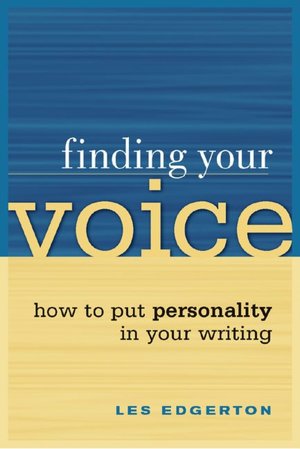
Les Edgerton the author of  Finding Your Voice: How to Put Personality in Your Writing says: "Don’t write to impress, fellow scribes. Write to connect with your readers. Your writer’s voice builds a better bridge to your readers. It’s your fingerprint, it’s your individual writing style, and it gives your writing soul". 


Edgarton's advice spoke volumes to me. For one thing, it made writing much less daunting. Trying so hard to sound like someone else made me less confident in my work because I never felt like I was getting it right. Gratefully, one of my mentors brought to my attention that my writing had great potential, but she could not identify my voice. She told me the more my writing sounded like me the more my reader could grow to love my work. I realized that I wanted my readers to pick up one of my pieces and instantly say, this sounds like Donnice without even looking at my byline.  


Your voice is what builds your brand. Your voice is what makes your readers fall in love--or not--with your work. In my work, you will hear a goofy, sarcastic, passionate young lady who is hungry for a prosperous future without any reservation--that's my voice. What's your voice?

Tuesday, June 5, 2012

Research, Research, and More Research!

by Donnice Peterson

As Nana's intern I have the opportunity to draft pitches of possible articles I may want to write about. I go on different websites such as nymag.com, thegrio.com, and fashionista.com to name a few and I read the day's stories so that my pitches can be relevant. The different writing styles and how the writers choose facts to support their work is very interesting, and sometimes even funny (the comments that readers leave are even funnier). Nonetheless, I've learned that in order for the writers to have a successful article or post they need a solid argument and solid proof.

When I intially started writing my pitches I would look at different articles, form my opinion and go from there. I thought that an interesting point of view would grab my readers and make a great article. To my surprise I was wrong. Sort of. Yes, readers want an interesting read, however, you have to get the facts right to make a convincing argument.

I recently read an article on nymag.com about how Carmelo Anthony "maneuvered the system to get exactly the coach he wants," leaving the Knicks "doomed" according to the writer. This was a very controversial topic for me because 1)I am very defensive when people speak of my team's future (#TeamKnicks), and 2)where does the author get off thinking that Carmelo has "maneuvered the system"? But after I read the article, I must say the author puts his facts together so well that he had me second-guessing Carmelo's intentions.

The article started off with the stats on former Knicks Lakers coach Phil Jackson and how he has taken many teams to victory. It also stated that the last time he considered being a coach for the Knicks was in 1999! Supposedly after each season the Knicks have been crying out for Jackson's help. And to their relief he is now considering the offer. But here's the kicker--the Knicks' previous coach Mike D'Antoni resigned and Mike Woodson took his place.

Why did D'Antoni resign? He resigned because, after working with Carmelo, he decided he would rather work anywhere else in the world than with that team. That was fine for Carmelo because he liked Woodson and worked harder under his coaching, and with Carmelo being one of the top players on the Knicks his efforts are needed for the team to succeed. However, the Knicks did not make it past the first round in the playoffs. Woodson got the team far, but Jackson might have gotten them the win. Yet, because Carmelo "likes" Woodson he may be staying which can possibly lead the team to another loss :(.

Clearly the author of this article did his research!!! He had so many valid facts that could support his position. Had he just said Carmelo "maneuvered the system" without any support his article would have been ripped to pieces (by me). But because of his research I could clearly see his point of view and understand why he would feel that way. The time he put into researching and building his case is what made the article successful (to me). He knew that people would be opposed to his view so he carefully laid down the facts so that he could be understood.

I now understand the importance of research. In my previous post I stated "passion is key"; well once you have identified your passion, I know now you have to be prepared to do much research to back it up.

The "Ammazing" Amma Interviewed Me for Her Video Series!


Writer / director Amma Bonsu trooped out to my apartment to shoot me for her online talk show "Ammazing Series" and it was an--wait for it--"ammazing" experience! Amma is a total pro and hoot to boot. Watch and chuckle for yourself.

Many thanks to Amma and Mr. FK Poku himself who connected us.

PS - check out Amma's site--and her interview with Maya Angelou!

Tuesday, May 29, 2012

My MSNBC Debut!!


Today was one of the most amazing days I've ever had! I woke up to an email from a producer on Chris Jansing's show reconfirming my appearance. She let me know author and NY Times journalist Jodi Kantor would also be Chris' guest during the segment. Her email included links to a HuffPo interview Toure did with Jodi Kantor on her book The Obamas, as well as a link to my article about the Obama Effect on TheGrio.com, and a link to today's NY Times story about the First Lady's book American Grown. I read each again and again, before returning to the notes I'd prepared on Michelle Obama's impact and influence on the fashion industry, and her work with the Let's Move! campaign.

They sent a car to pick me up!
After expending some of my nervous energy loading my dishwasher, I got dressed (I chose a red linen dress with a subtle diamond pattern that my sister designed in Ghana, along with the brown Manolo Blahnik mules I scored at one of the designer's sample sales), and emailed one of the bookings producers to confirm the timing of the car pick-up. Bless her for her patience as I accidentally sent the email twice. Literally right after I emailed, the car service company called to let me know they were in front of my building.


Just before I went on air,  a nice gentleman mic'd me up
When I got to the studio, excuse me, 30 Rock(!!!), I waited in the green room before the make-up artist came to get me. I wanted so badly to ask her to do "eyeliner wings", but was too nervous. But guess, what? She did them!!! She must have heard my request telepathically. LOL. While I was getting my make-up done, Chris Jansing walked in. I gave her a very eager "Hi!" She responded very graciously.


I could hear Jodi Kantor saying she couldn't hear anything
Anyway, at 10:37a, one of the producers came to get me. We passed the blinking "On Air" sign and entered a big studio that had a bank of people sitting at their computers on one side, and the set on the other. Chris Jansing was sitting in her anchor's chair. When I was fully mic'd, the sound guy walked me to the guest chair and adjusted the mic a bit more. I sat facing Chris, but right behind her I could see a few monitors, one with me on it, and one with the B-roll going. Now, right before I went on air, my editor Alexis (who assigned me the Obama Effect story) called to give me a few on-camera pointers, so I knew not to focus on the monitors and keep my eyes on Chris. I did watch the commercial playing on mute though.

I don't remember a word I said, LOL!
Then our segment began! Chris introduced Jodi and me and then got to her questions. Jodi answered hers. I answered mine, and then I heard Jodi say she couldn't hear anything. I knew that meant I would get more questions so I just tried to get all the stats I had memorized at the ready. I think I was on for like three minutes, and then the sound guy was taking the mic back and I was leaving the studio.

My friend and editor Alexis assigned me the Obama Effect story!
Alexis came to get me and took me to her office where TheGrio.com staff were having a meeting. I thanked them all for the amazing opportunity, then tried to call my mom. There was already a missed call from her. :-) We kept trying each other. When I called her, the line would be busy, and she must have experienced the same. When we finally got through, we both started screaming with excitement.

I DVR'd the show, but I'm waiting to watch it in its entirety with my sibs. 

Monday, May 28, 2012

I'm Talking Michelle Obama on MSNBC, 5/29 at 10a!

I'll be on the show "Jansing and Co." for a segment discussing Michelle Obama's influence, as the First Lady's new book American Grown will be released tomorrow. They asked me on because of an article I wrote on The Obama Effect for TheGrio.com. Very excited, a little nervous, and obsessing over what to wear. My mother has warned me NOT to wear a buubuu (which makes me reeeeaaally want to :-)). I'll be sure to take tons of pictures and report all the behind the scenes haps.